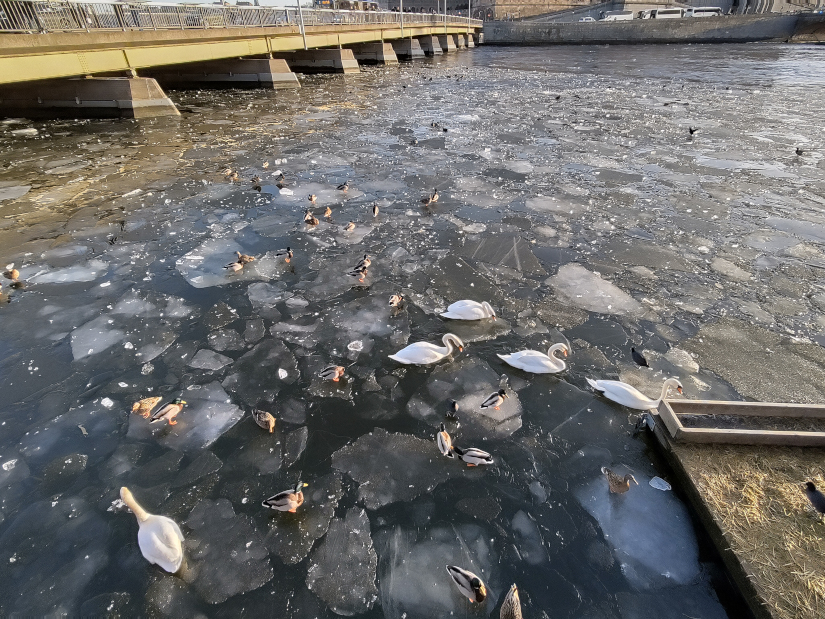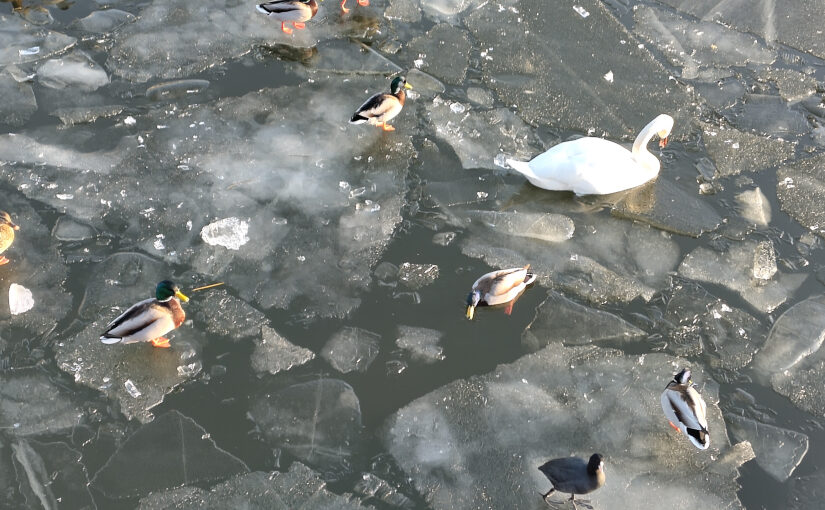
Mass flow is a dance inspired by sea ice and its movement on the Baltic Sea this winter past. My experience of dancing contact improvisation in trios and the Skiing-on-Skin 2026 dance festival also added to my thoughts for it. Here I present an initial ‘score’ which guides the performance: it’s not a strict choreograph but guidelines and a direction of travel.
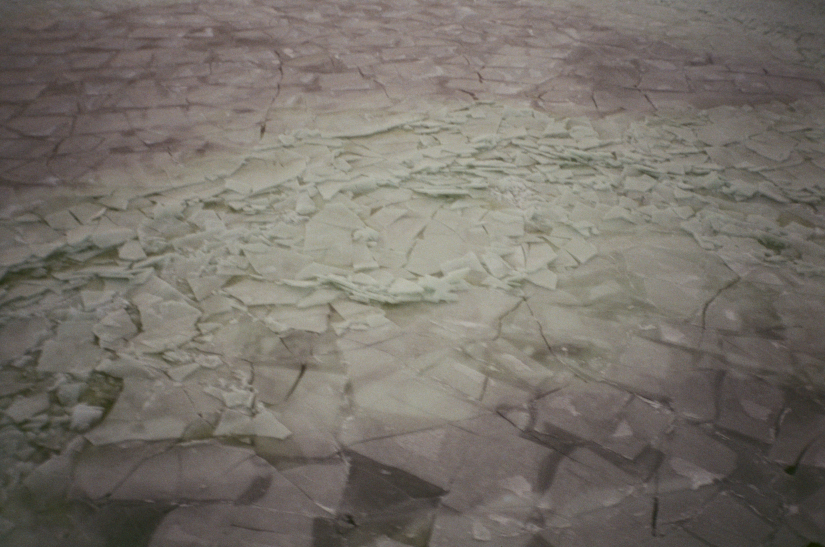
While the idea for this dance was inspired by my journey across the Baltic sea by ship, and seeing its sea ice, it’s really about surface and movement on surface. It’s also the idea of a long dance. I suggest that an hour would be sufficient but it could last much longer. It’s reminiscent of the Long player musical performance.
In the history of contact improvisation, Nancy Stark Smith proposed a score for a contact improvisation dance which she called ‘The Under Score’. It similarly guided the construction of a dance performance. The idea here is similar in that it is an open construction allowing improvisation within a framework.
Mass Flow
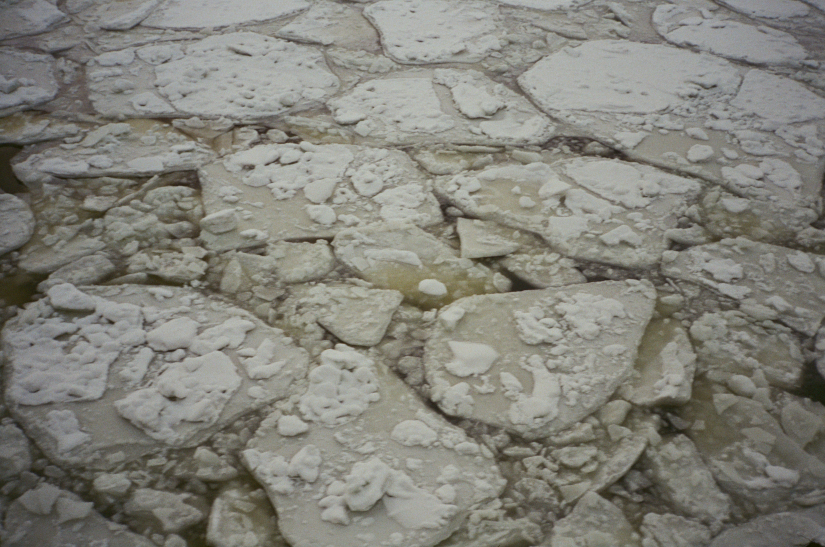
Briefly, the dance performance uses a score and develops a motif from the interaction of trios which are a atomic unit. The dance is very much about surface – the surface of the dancers bodies and the ground below them. The ground is a kind of skin which the earth keeps at its surface, of course. Much like the sea has a surface on it which ice and other bodies my move and float.
The trios move as a unit using their contact techniques and they stay at ground level – let’s say no more height than kneeling on the floor. While there were sessions at Ski on Skin about dancing in trios, they were mostly about moving on our feet rather than body surfing in trios, etc. This requires research!
There some interaction ‘rules’ in that while the trios may interact thus creating ensembles of more than three dancers, when the dancers separate from the ensemble then they need to do so as a trio! This preserves the ‘atomic unit’ of a dancing trio and its motif even though there are repeated interactions of the dancers within the trios and between them.
Four phases
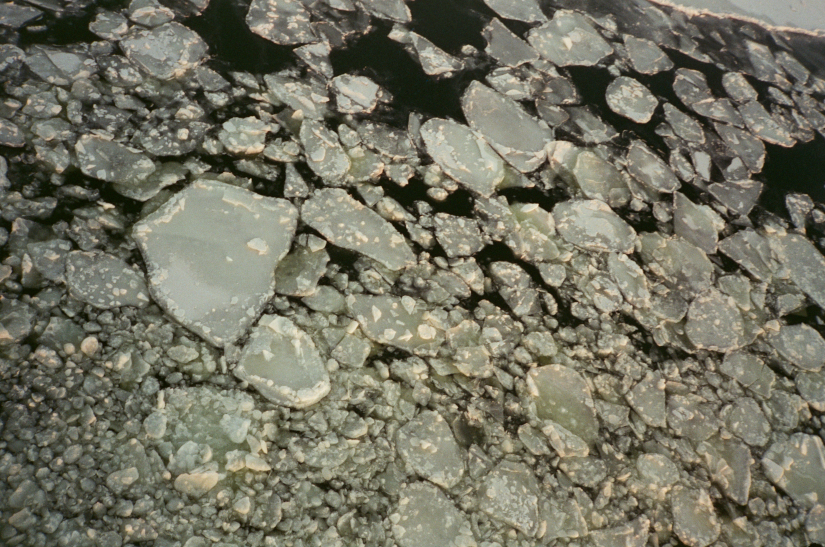
Formation At the beginning of the performance, the dancers are sat around the edges of the performance space as individuals. The stand and slowly walk to each other forming a mass. This is the formation phase. Standing close together, they then move as one in the dance space. Perhaps they hum, if they wish.
Disassembly In the second phase, the dissolution phase then trios of dancers ‘cleave’ – drop to the floor from the mass – and begin their journey as trios, moving and interacting: flowing.
Flow Gradually, all of he trios have started their journey, assembling and dissembling with other trios. It’s a kind of trio jam within the form – ie moving together and not standing. Gradually, all the dancers are in their form and moving on the floor surface. This part of the dance is possibly the longest part as there integration and dis-intergration of the dancing trios.
Dissolution and ending Finally, the last part of the score. This part is to be written but it could simply be the trios dissolve – become individuals and roll to the edge of the performance space. It’s the dissolution phase.
Clearly, there is much to explore: how the dancers in trios interact. How do they travel, what are the motions in that? Could we simplify the interactions – perhaps thinking about a person sitting, as a right angle for example. Folding at the waist, lifting the pelvis to move ‘up’ in this shape, and indeed all the constraints of not standing on our feet. Certain movement patterns might emerge: a trio has some patterns of symmetry for example. These are things to explore in development workshops and through our embodied experience.
Scale

The minimum number of dancers for his project is three – a trio. That’s enough to start the research of how the a trio moves and travels across the floor surface within the motif set-out above.
After that, it needs to scale. Let’s say we aim for 60 people dancing – that’s 20 trios. At this scale then we will start to see the emergence of patterns in movement and behaviour.
The challenge is finding the dancers, the place and an audience. That’s putting aside funding. Truly, dance is a social construction!
Related posts
See related posts with #massflow tag