The residuals series started with charcoal granules being moved and pressed onto a paper surface. Charcoal is produced when wood is subject to pyrolysis – or burning in a oxygen starved environment. In Residuals #11, I investigate the possibilities created by interceding in the charcoal production process; and researching charcoal production at a charcoal kiln.
Background
Charcoal may be made in a number of ways including digging a pit, creating a wood fire in it and covering the burning wood; loading a vessel – charcoal kiln for example – with wood, setting it alight and excluding air as it burns; or using fully automated machinery which continuously takes wood and produces charcoal.
The output of the pyrolysis process is partly defined by the form or shape of the wood used as a feedstock but the resulting charcoal can be cut, shaped, crushed and ground to give differing material outputs from lump wood to a fine powder.
Charcoal is used in many ways including: as a combustible fuel for heating or cooking; as a powder for its black pigment; and for filtering water and air to purify it. Charcoal sticks used by artists may be held in the hand for drawing on paper, and they are typically from willow branches – each charcoal stick was once part of a tree branch. Charcoal – also known as wood biochar – can be also used as a soil addendum (‘plant fertilizer’) – to increase crop yields.
Research questions
I wanted to investigate if a charcoal kiln could be used in a similar way to a ceramics kiln. If shaped wood were put into a charcoal kiln then after firing/a burn, would it retain its original shape? Would it be very fragile or fragmented? Also, could charcoal be cut and shaped after it was produced, or is the wood best shaped prior to pyrolysis? Could charcoal be sculptured in some way? Indeed, what does charcoal sculpture mean?
Creating a charcoal sculpture
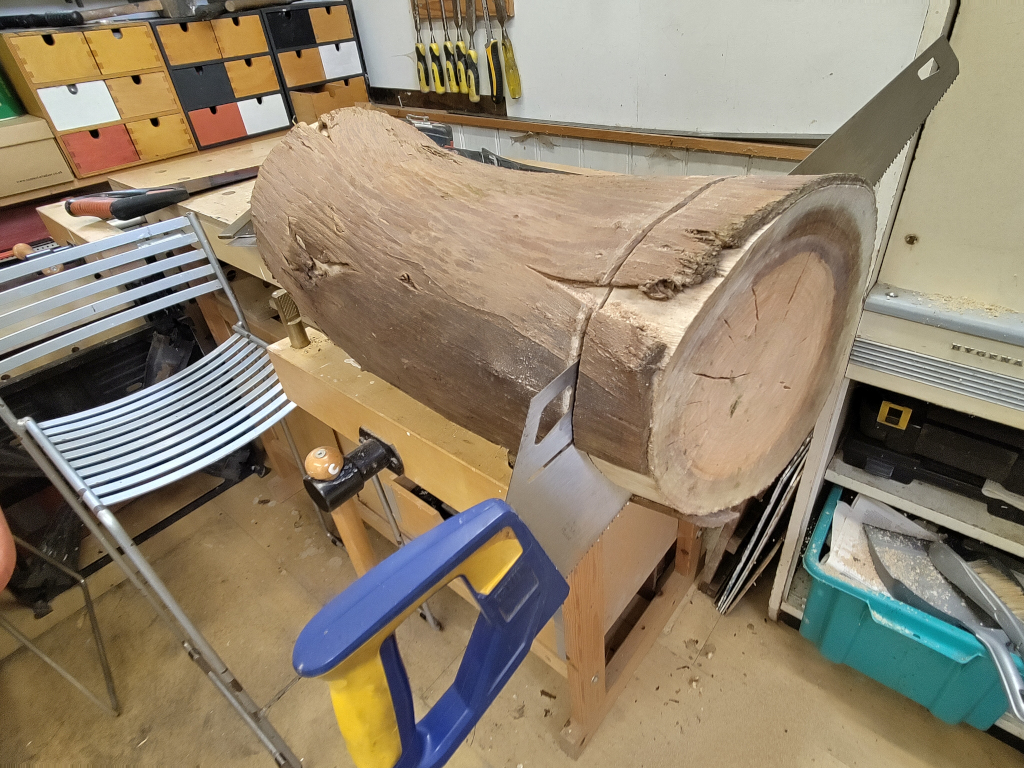
I decided to take a log and cut it into slices or discs. These could be assembled into a three dimensional shape. My idea was that these charcoal discs could be retrieved from a charcoal kiln and then assembled into a shape. Slots cut into the discs would allow then to fit together. I made some drawings and models in cardboard.
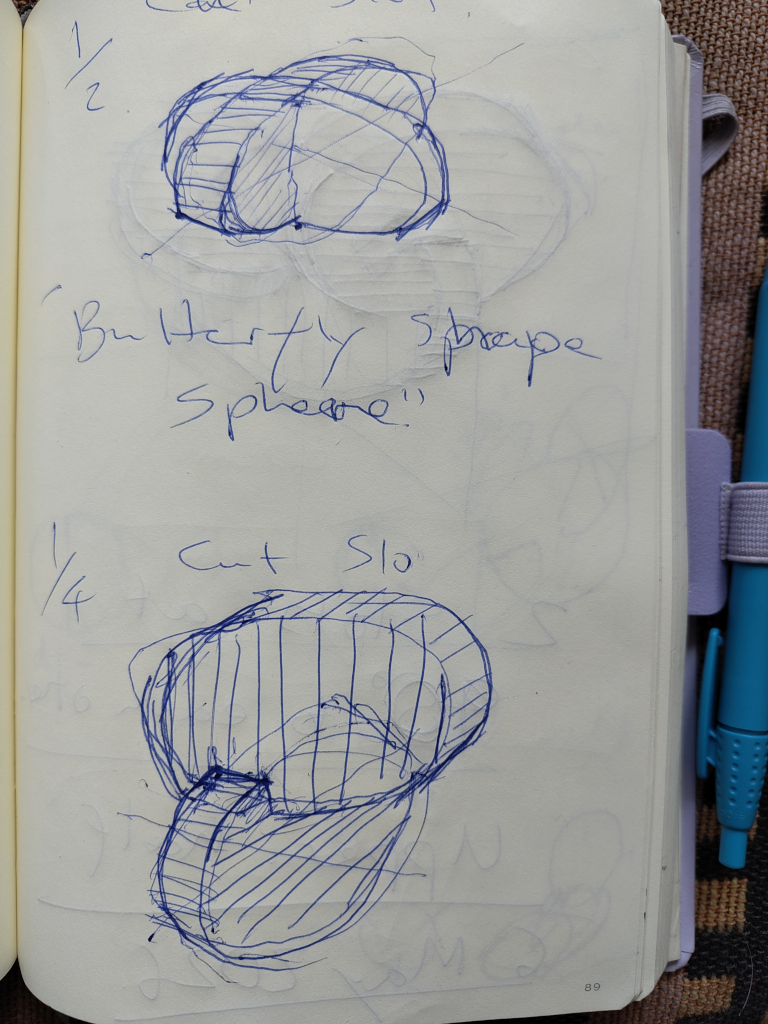
The slots in the discs need to be no more than half the diameter but they could be less, and there could be more than one. I was reminded of a children’s construction model which a I recall, where flat hexagons made in plastic with multiple slots that could be pushed together to make elaborate assemblages.
Cardboard models
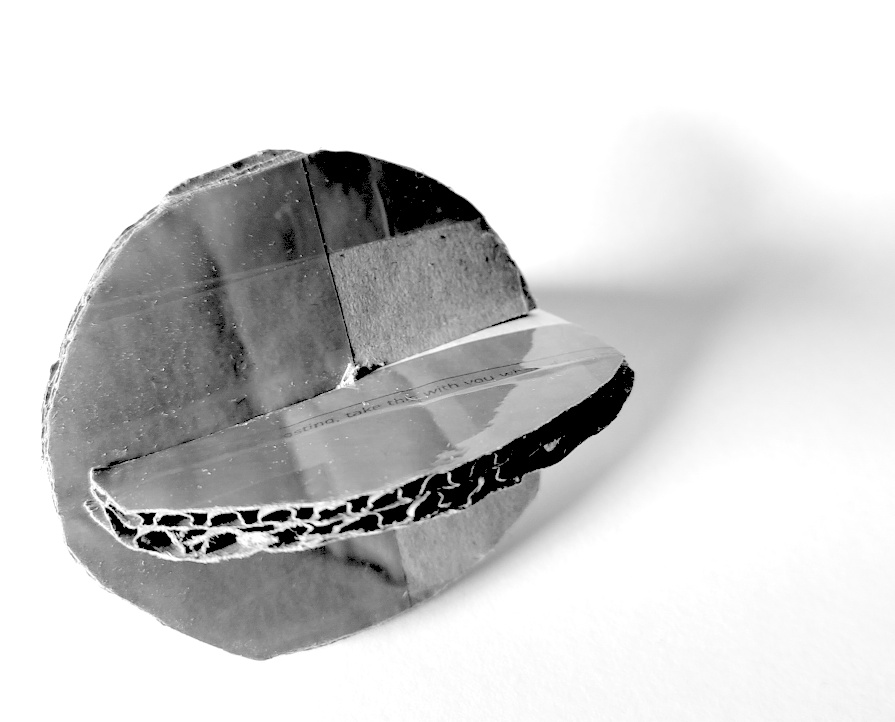
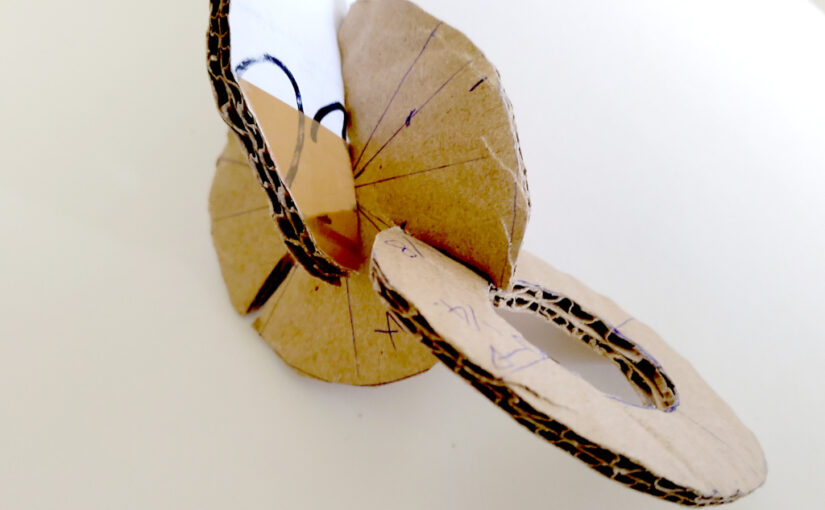
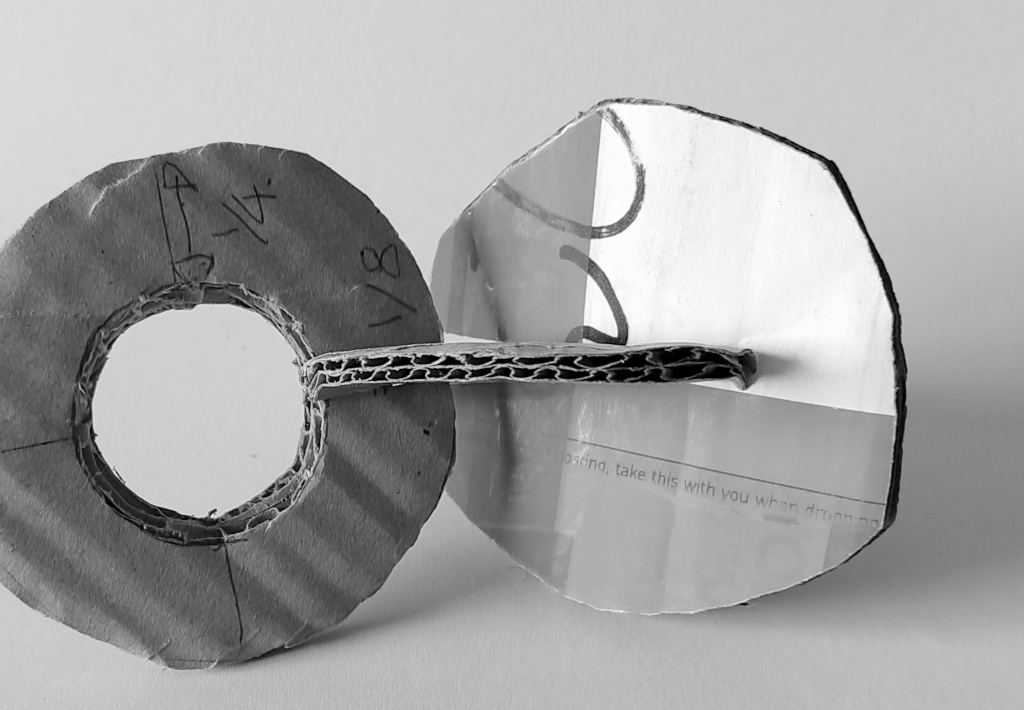
To investigate using slices or discs cut from a log, I used cardboard cut into disks of about 7cm. Slots cut into them allowed for their assembly into sculptures. One of the discs had a hole cut into the centre of it, creating a ring.
Two of the discs could be slotted together giving a spherical volume. Slots with lengths of – a half, a quarter or an eighth the diameter of the disc resulted into differing shapes and allowed me to model possible designs.
Ready-made sculpture
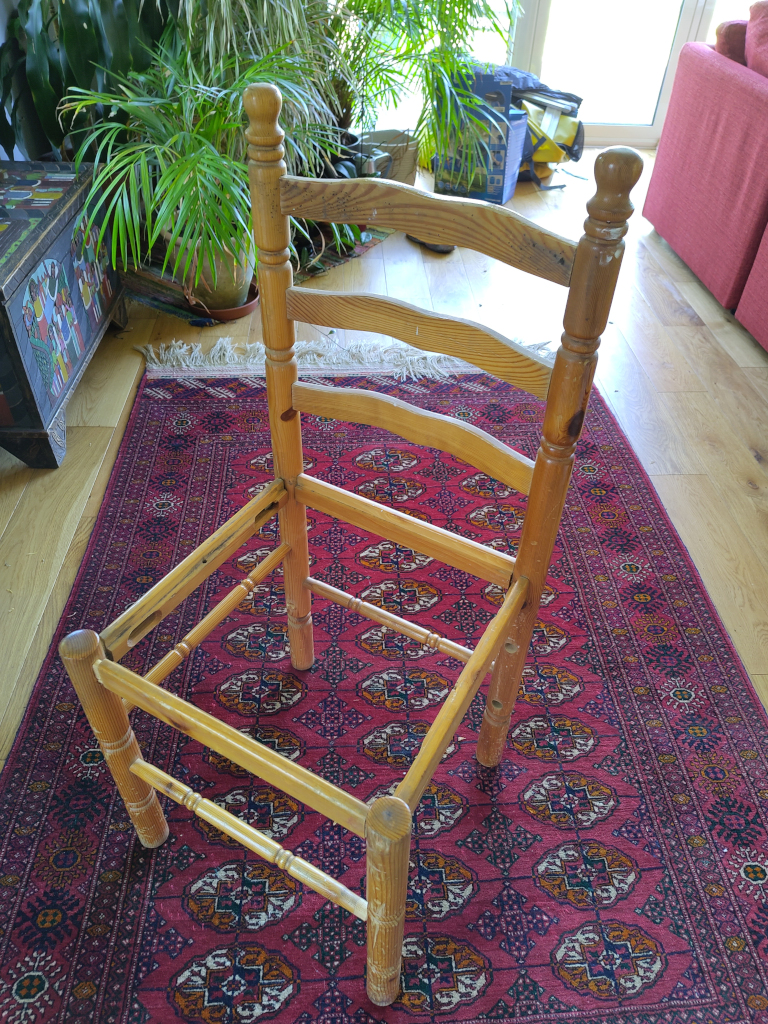
Beside creating the disc assembly described above, I also found an abandoned wooden chair – a flat-pack one or at least its frame – which could also be put into the charcoal kiln. So that was another piece of research – would it survive and could it be reassembled? If the chair fragments after firing then what are the artistic possibilities? What does it mean – to have a chair which is made of charcoal or indeed only the fragments of it?