If you write a paper for publication in an academic journal then you need a literature review. So I used AI tools from OpenAI (Chat GPT), Google (Gemini) and Anthropic (Claude) to create a review for a paper about crop trials using charcoal (biochar from wood) as a plant fertilizer. Here’s the results and how I used them.
A literature review is undertaken prior to writing an academic paper. It usually forms the first part of the text, introducing the existing research and setting the context for a description of the research being reported.
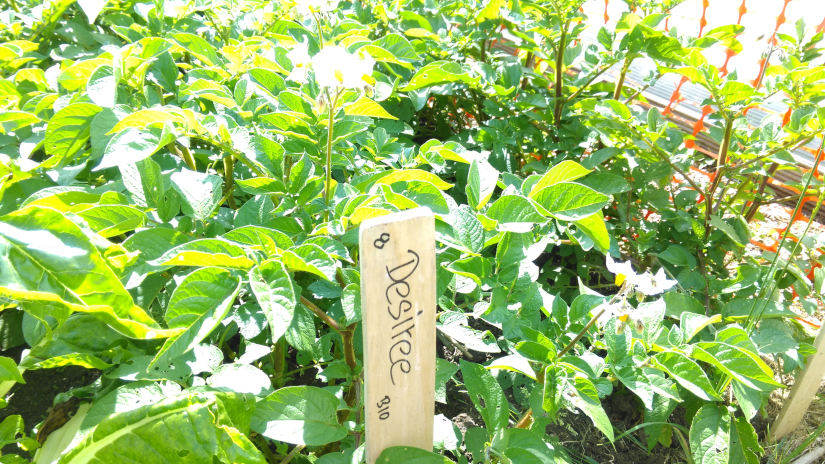
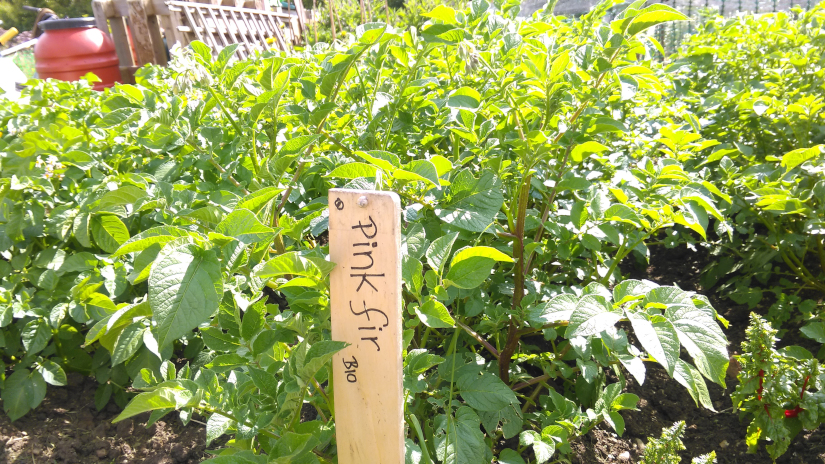
I need to undertake a literature review for my co-created research work into studying the effect of charcoal on potatoes and the weight (yield) of the harvested crops. The residuals art series was also undertaken at the same time and it used charcoal too.
I used three AI machines/ AI tools and prompted them to produce a literature review. The prompt to each was the same:
Write a literature review with references to peer reviewed and published papers of no more than 750 words showing the effect on potato plant yields of cultivation using charcoal (wood biochar) as a fertilizer.
Include the changes in yield – including as a percent, exclude sweet potato. Use Havard Style references only.
I’ve included the results as three PDFs which you can download and read. All were created on 25 March 2026. Note: ‘Harvard’ was misspelled in the prompt but this didn’t seem to matter!
Read OpenAI’s Chat GPT: OpenAI (2026) ChatGPT (GPT-5.3)
Read Google’s Gemini: Gemini (Gemini 3 Flash version) [Large language model]
Read Anthropic’s Claude: Anthropic (2025) Claude Sonnet 4.6 [Large language model]
How I shall use these generated literature reviews
My main interest in using these AI tools was to find papers of relevance to the question of changing yields due to biochar. In a sense, I used them as sophisticated search tools.
For each of the papers quoted by the AI tools then the referenced papers need to be checked for:
- actually existing – as a paper ie the link/reference is correct;
- being correctly quoted – the information in the referenced article is quoted as presented in the paper. This includes – for example, if a figure for increased yield is presented as a percentage of something. It could be a derived fact – the percentage is not in the paper but the AI machine has calculated it from the absolute crop yields. Or is the presented figure (a percentage) as it is quoted in the paper, and indeed – is it correct?!!;
- and relevance – if the biochar is not derived from wood then that’s less relevant to this research.
The prompt I gave above was actually my second draft of it. Initially, I omitted ‘Include the changes in yield – including as a percent’ and ‘Use Harvard Style references only’. This did change the output of the AI tools and it considerably narrow the papers reported.
Search tools: Google Scholar
Prior to using the AI tools, I used Google Scholar for a quick search for relevant papers, searching on ‘crop trial potatoes and biochar charcoal’. This searches the world wide web – so a very wide search of all that is reachable on the web!
The reults helped in forming a hypothesis about the expectation in increased yield of potatoes due to wood biochar/ charcoal.
Specifically, I was looking for a meta-analysis and/or meta-review of the effects of biochar on potatoes. Looking through the results, I found this in the results list produced by Google Scholar (May 2024):
Liu, X., Zhang, A., Ji, C., Joseph, S., Bian, R., Li, L., Pan, G., Paz‐Ferreiro, J. 2013. Biochar’s effect on crop productivity and the dependence on experimental conditions – a meta‐analysis of literature data. – Plant and Soil, 373:583–594. DOI: 10.1007/s11104-013-1806-x. See: https://link.springer.com/article/10.1007/s11104-013-1806-x
The paper’s abstract says ‘A weighted meta-analysis was conducted based on data from 103 studies published up to April, 2013’. The paper above makes no specific mention of potatoes although other crops like maize and rice for example, are included.
But this paper says ‘In the published experiments, with biochar amendment rates generally <30 t ha−1, BSA increased crop productivity by 11.0 % on average, while the responses varied with experimental conditions.’ So for crops in general, the yield increase is 11% on average.
But apparently, no meta-analysis of potato yields and biochar in particular? Even so, the hypothesis which was used initially, was a 10% increase in potato yield due to the charcoal.
Reliability of search tools
While Google Scholar is a good start in conducting a literature review, it does included research not published in journals and so potentially not peer-reviewed. For example, this paper filed in research gate: Effect of biochar on yield and quality of potato tuber (2018) was high in the list of results from Google Scholar.
This 2018 paper by Omar Ali Mollick at the Department of Soil Science, Sher-e-Bangla Agricultural University, Dhaka in Bangladesh, is apparently a research project for his post-graduate degree. While the research may be completely valid, it’s not published in a peer-reviewed journal. This is a problem – at least for the reader. Do we have the time, skills and knowledge to actually evaluate the described research? Indeed, how can we be sure the described work was actually conducted and in the way described, and that it was conducted at all! ie is it fact or fiction?
Does peer review matter?
The publication of a paper in a peer reviewed journal might give us confidence. We might say, it’s the status of the publication which seems to determine the validity and authenticity of the research and not necessarily the research itself. But it helps us – the reader – as we can simply assume it has a certain validity from publication in a peer reviewed journal. Although not all journals are reliable … but that’s another story.
Interestingly, the author Omar Ali Mollick – see above – is listed as one of the authors of a paper returned by two of the AI tools surveyed here – see below. Infact, this seems to be the publication of his postgraduate research in a peer review journal two years later in 2020: The International Journal of Bio-resource and Stress Management (2020) 11(5) 445-450.
Quoted papers
Below is a summary of referenced papers from each of the AI tools. It is quite surprising how much the referenced papers differ! There are 13 papers referenced in total by all three of the AI tools.
But there was no paper(s) which were chosen by all three of the AI tools which I tried, despite having the same prompt.
There were two papers which were chosen by two of the AI tools which I tried – Chat GPT and Claude, and these were:
Hou, J., Xing, C., Zhang, J., Wang, Z., Liu, M., Duan, Y. and Zhao, H. (2024) ‘Increase in potato yield by the combined application of biochar and organic fertilizer’, Frontiers in Plant Science.
and
Mollick, M.O.A., Paul, A.K., Alam, I. and Sumon, M.M. (2020) ‘Effect of biochar on yield and quality of potato (Solanum tuberosum) tuber’, International Journal of Bio-resource and Stress Management.
So overall, quite a surprising divergence in the choice of papers by the three AI tools perhaps reflecting the differing datasets on which they were trained?
It’s difficult to really assess the value of the tools as we don’t know what was omitted and indeed, how much of the published literature was used in the training of the AI tools. ie the extent of the datasets and the thoroughness of the search. But nevertheless, the results are convincing.
Part (2) of this series will be further evaluating the results from the three AI machines according to the criteria set out above. If you’re interested in this then let me know. Thank-you.
Results from the three AI tools
| Paper name (reference) | Chat GPT | Claude | Gemini |
|---|---|---|---|
| Biswas, B.R., et al. (2024) ‘Synergistic effects of biochar and vermicompost on yield and quality of potato’, Bangladesh Agronomy Journal. | Yes Chat GPT | No | No |
| Blackwell, P., Krull, E., Butler, G., Herbert, A. and Lehmann, J. (2010). ‘Effect of biochar on germination and early growth of seedlings‘, Annals of Applied Biology, 156(1), pp. 125–133. | No | No | Yes Gemini |
| Carter, S., Shackley, S., Sohi, S., Suyamto, D. and Bird, N. (2013). ‘The Impact of Biochar Application on Winter Wheat and Starchy Tuber Yields over Two Cropping Seasons‘, Agronomy, 3(2), pp. 338–372. | No | No | Yes Gemini |
| Dawerasha, S.S., Nebiyu, A., Ahmed, M. and Haile, B. (2024) ‘Effect of coffee husk biochar and inorganic NP fertilizer on soil properties, growth and yield of potato (Solanum tuberosum L.) on acidic soil of southwest Ethiopia’, CABI Agriculture and Bioscience, 5, article 56. https://doi.org/10.1186/s43170-024-00261-y | No | Yes Claude | |
| Guo, J., Zhou, H., Jia, L., Wang, Y., Fan, M. and Qin, Y. (2025) ‘The effects of biochar on soil quality and potato yield in arid and semi-arid regions’, Research Study (preprint). Available at: | Yes Chat GPT | No | No |
| Hou, J., Xing, C., Zhang, J., Wang, Z., Liu, M., Duan, Y. and Zhao, H. (2024) ‘Increase in potato yield by the combined application of biochar and organic fertilizer’, Frontiers in Plant Science. | Yes Chat GPT | Yes Claude | No |
| Liu, X., Zhang, A., Ji, C., Joseph, S., Bian, R., Li, L., Pan, G. and Paz-Ferreiro, J. (2021). ‘Biochar’s effect on crop productivity and greenhouse gas emissions under field conditions‘, Scientific Reports, 11(1), pp. 1–12. | No | No | Yes Gemini |
| Marat, A.K. (2023) ‘Development of biochar to improve soil health and increase potato yields’, International Journal of Design & Nature and Ecodynamics, 18(1), pp. 221–228. https://doi.org/10.18280/ijdne.180129 | No | Yes Claude | No |
| Mawof, A., Prasher, S., Bayen, S., Anderson, E.E., Sotelo-Camacho, S., Nzediegwu, C. and Dhiman, J. (2021) ‘Effects of biochar and biochar-compost mix as soil amendments on soil quality and yield of potatoes irrigated with wastewater’, Journal of Soil Science and Plant Nutrition, 21, pp. 2600–2612. https://doi.org/10.1007/s42729-021-00549-2 | No | Yes Claude | No |
| Mollick, M.O.A., Paul, A.K., Alam, I. and Sumon, M.M. (2020) ‘Effect of biochar on yield and quality of potato (Solanum tuberosum) tuber’, International Journal of Bio-resource and Stress Management. | Yes Chat GPT | Yes Claude | No |
| Paswan, S., et al. (2025) ‘Effect of biochar with different fertilizers on growth and yield of potato (Solanum tuberosum L.)’, Arab Universities Journal of Agricultural Sciences. | Yes Chat GPT | No | No |
| Wang, H., Liu, Y., Chen, Z., Zhang, J. and Fan, J. (2025) ‘Effects of biochar from different pyrolysis temperatures on soil physical properties and hydraulic characteristics in potato farmland of arid and semi-arid regions’, Agricultural Water Management, 313, article 109501. https://doi.org/10.1016/j.agwat.2025.109501 | No | Yes Claude | No |
| Zhang, Y., Du, Z., Huang, J. and Zhu, J. (2019). ‘Effects of biochar application on potato yield and nitrogen utilization efficiency‘, Journal of Plant Nutrition and Fertilizers, 25(6), pp. 980–989. | No | No | Yes Gemini |